How communities are taking the lead to end female genital mutilation
Female genital mutilation (FGM) still affects millions of girls, but many communities are fighting back. Young people, parents and local leaders are pushing for lasting change.
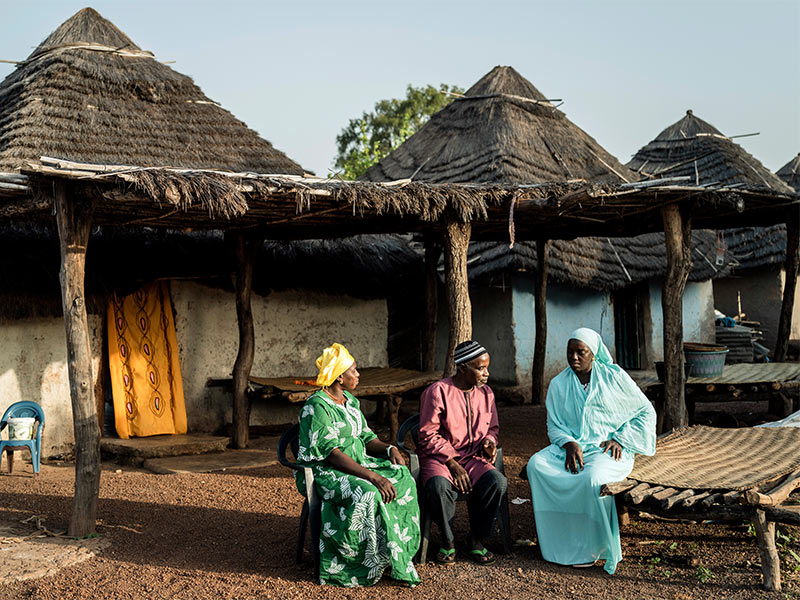
In many countries, communities are moving towards abandoning female genital mutilation. But real progress can take decades to achieve. In other places, progress has come to a standstill.
And even more worryingly, in some regions, new laws threaten to undo progress altogether, risking decades of hard‑won gains and putting even more girls in danger.
Over 230 million girls and women have undergone female genital mutilation. Every day girls continue to face this harmful practice and live with its lifelong consequences.
Despite these threats, communities are not backing down. They’re pushing forward and refusing to let progress slip away.
Meet the allies who are leading the fight against female genital mutilation in their communities.
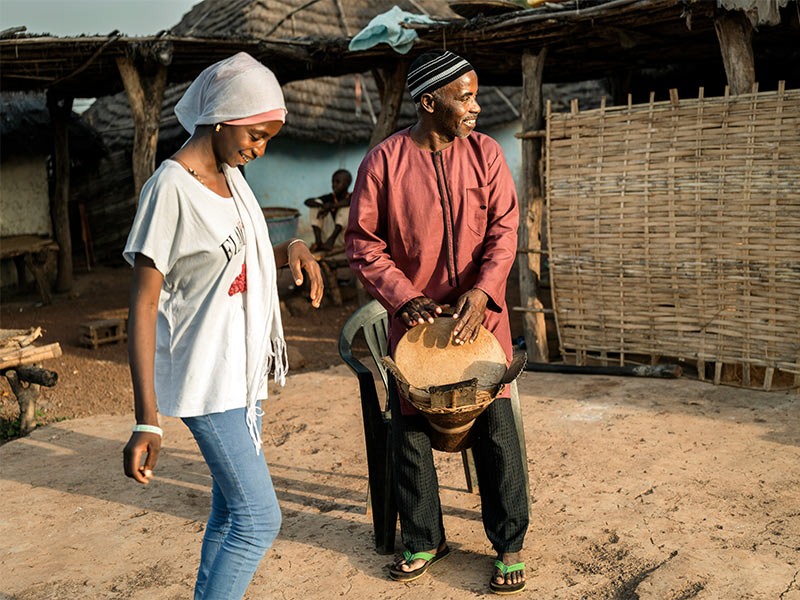
“My dad was the one who told me not to accept FGM,” says Fatou, 16.
In the remote villages of southeast Senegal, a powerful movement is transforming the future of girls. Once a widespread practice, female genital mutilation is now being challenged.
Bamba, 56, is Fatou’s father and a griot, a traditional Senegalese storyteller, often invited to speak at weddings.
He remembers how deeply rooted FGM once was: “If the girls were 10 years old, the guardians of tradition informed the village that such a day would be FGM day, and it was celebrated. If it wasn’t done, it was a shame for the girl.”
Now, Bamba is a member of the Father’s School, a community group that teaches men about the dangers of FGM and why it must end. He travels to nearby villages and speaks on local radio to raise awareness and challenge old beliefs.
“There has been a real change. Now, the younger generation no longer emphasises FGM”.
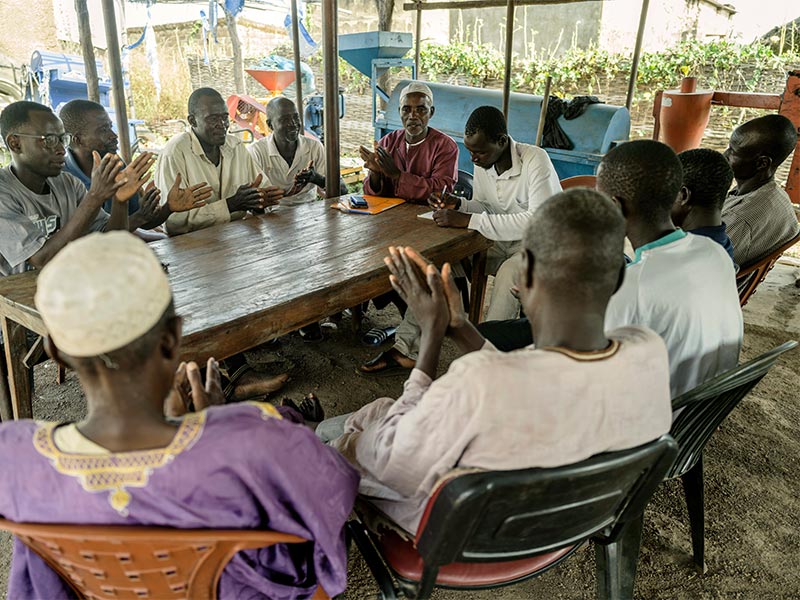
Husbands, fathers, and religious leaders across all generations are stepping forward to end female genital mutilation (FGM) and stand up for girls’ rights.
They come together in a non-formal setting to teach their peers about protecting their daughters from violence, the importance of keeping girls in school, the harmful effects of child marriage and FGM.
Fatou often joins her dad, Bamba: “I’m very proud that my dad defends girls and fights against FGM.
Sometimes we work together. If my dad has an awareness activity, he calls me to participate. And my mum, says, 'Ah, you have to go to that awareness session; hurry up and go.’”
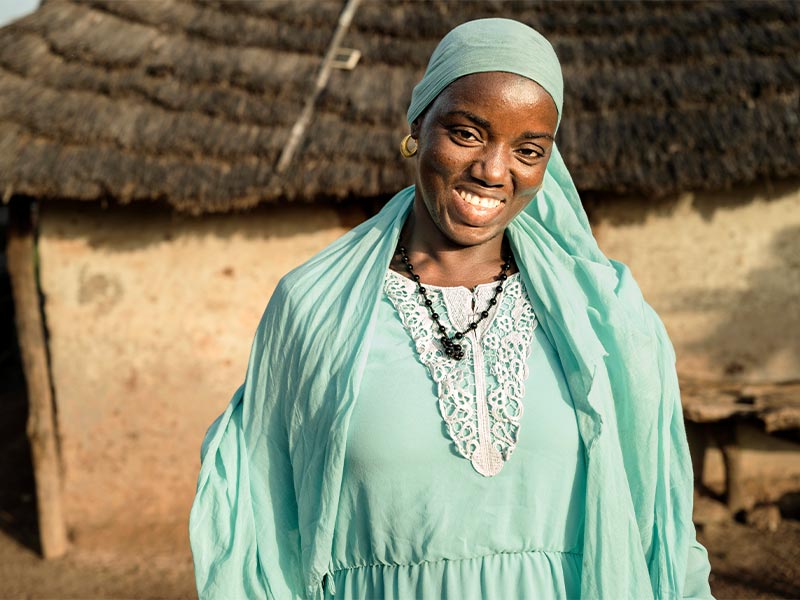
Bamba’s wife, Soumtou, 42, remembers when Bamba showed her the consequences of FGM.
“When I first saw the photos, I screamed. It was my husband who started the fight against FGM. In the community, everyone agrees with him and encourages his commitment.”
Soumtou explains that the beliefs and myths about FGM in the community are based on the idea that boys must be circumcised, so girls must also be cut.
“I am happy to see my husband involved in the fight against FGM in the village. We work together; he leads discussions held in the village and surrounding villages. He takes me along, and we defend the topic of FGM together as a woman is better listened to when speaking about FGM.”
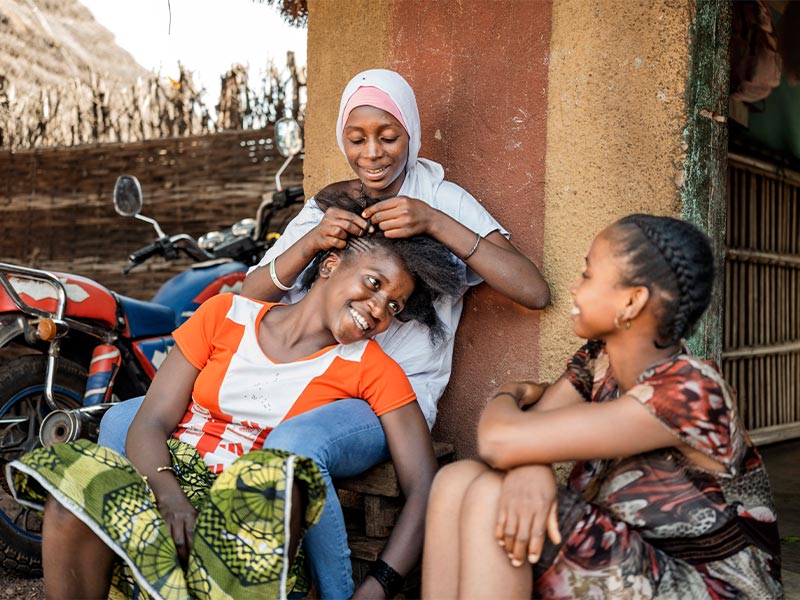
"My friends understand the fight against FGM better. Some have changed their minds, especially after participating in awareness sessions." says Fatou.
In total, there are 311 members of the Fathers’ School who, through their activities, have reached more than 20,000 people in Senegal.
Abdourahmane, 56, is the chief of this village in Kédougou region. He has opposed FGM for many years and no longer tolerates the practice in his community.
He remembers how common it once was: “In my generation, 10 out of 10 girls were cut. These girls encountered difficulties.”
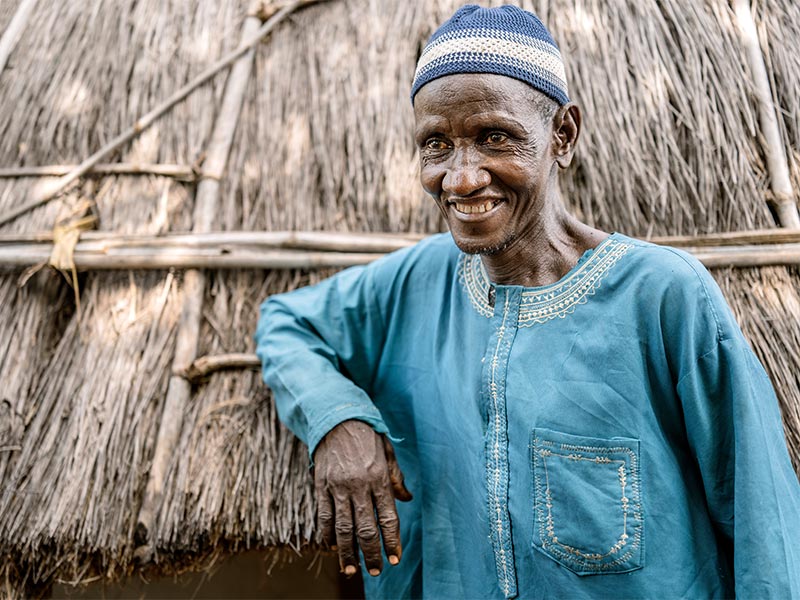
“Since the youth began to advocate for abandoning FGM, explaining the health difficulties faced by girls, mentalities began to change. But before, people mocked girls who weren’t cut.”
Five years ago, when the Fathers’ Schools were set up, village chief, Abdourahmane, led his community to sign a pact to completely eradicate FGM, in collaboration with Plan International and its partners.
Today, the practice of FGM has largely died out in these villages and nearby communities.
Communities leading the way to lasting change
Around the world, communities are coming together to challenge harmful beliefs and traditions. Programmes like Plan International’s Fathers’ Schools create a welcoming space where men learn, talk, and take action to support girls’ rights.
Challenging patriarchy and restrictive gender norms should not fall only on girls and women. Engaging men and boys is essential to eliminating FGM and advocating for gender equality.
This matters now more than ever as the world is seeing a dangerous trend of attacks on girls’ rights. Progress is under threat. But communities like these show that change is still possible. The fight for girls’ safety and freedom is far from over.
Together we can ensure the world is a fair, safe and equal place for girls. But your donations are vital. Donate to Fierce Voices and support projects that empower girls and tear down barriers so they can reach their potential.