What Are Online Harms and Social Media Dangers?
What Are Online Harms and Social Media Dangers?

Online harms are harmful experiences people can encounter through the internet, social media platforms, gaming services and other digital technologies. They include cyberbullying, grooming, extremist content, sextortion and misogynistic and gendered content recommended by algorithms driven by profit, not people. While online spaces can help young people learn, connect and express themselves, they can also expose them to serious risks. Girls and young women are often disproportionately affected by many forms of online harm, including online harassment and technology-facilitated gender-based violence. The UK Government is proposing a social media ban to mitigate these dangers – but a blanket ban ignores children's rights to access safe online lives and fails to hold tech platforms accountable through the Online Safety Act. Young people shouldn’t have to fight for safety or be punished for Big Tech’s failures.
What are online harms?
Online harm refers to negative or damaging experiences that people can have as a result of harmful content or behaviour on the internet. It can be negative, immoral, abusive, or in some cases illegal. Women and girls, young people and minoritised groups are most likely to be victims of online harms, although it can impact anyone, putting safety and wellbeing at risk. It doesn’t have to be this way though. The internet should be a place where everyone can learn, connect and thrive – and action from tech companies and governments could be a game changer.
Harmful content
Harmful content is any online material that causes mental or physical distress, sparks fear or does damage to a person. It can take many different forms:
- Cyberstalking, bullying and abuse
- Graphic or violent material
- Age-inappropriate content
- Misinformation
- Grooming and predatory content
- Scams and fraud
- Non-consensual intimate image abuse
- Content promoting self-harm, suicide, eating disorders or other harmful behaviours
- Content that encourages impossible or regressive beauty or body standards
- Illegal activity
- Extremist or radicalising material
- Data harvesting and privacy violations
Age-inappropriate content
Age-inappropriate content is any media, text, video or image that is not suitable for a person's age or stage of development. It can be confusing, upsetting or potentially harmful - making it harder for children and young people to navigate the online world safely and confidently. What is considered age appropriate can vary depending on a young person's individual development, cultural context and the boundaries set by parents or carers.
Doxxing
Doxxing is when someone's private or personal information is shared online without their consent – normally to shame, scare or financially harm them. Home addresses. Phone numbers. Workplace or school details. Personal photos and messages. Doxxers regularly share any or all of the above, making their targets feel unsafe on and offline. As public debate becomes increasingly polarised, doxxing is often being used to intimidate people for their political views. While anyone can be affected, women, young adults, activists, journalists, gamers and public figures are often targeted.
Sextortion
Sextortion is a serious form of online blackmail that is a crime in the UK. It sees criminals threaten to share sexual images, videos or information about someone if they refuse to pay money or do something against their will. People don’t have to share any images or information to be victims though – perpetuators often hack people’s accounts or create deepfakes that appear real. As access to artificial intelligence increases, image-based abuse is becoming much more common. A total of 98% of deepfakes are sexually explicit, and 99% of those depict women.
Criminals, often from organised crime groups, often target people with sextortion through social media, dating apps or pornography websites. They’ll sometimes befriend their target over a long period of time, using fake identities of young people to protect themselves. Other times it can happen very quickly. Teenagers aged 14 to 17 years old are most at risk, with boys being targeted most often.
Online misogyny
Online misogyny is the hate, discrimination, and harassment that women and girls face in digital spaces. While it happens online, it is rooted in the same gender inequalities, harmful stereotypes and unfair power imbalances that exist offline. As a growing global crisis, online misogyny contributes to gender inequality by discouraging women and girls from participating fully in digital spaces.
Girls and young women have every right to feel safe, confident, and welcome in digital spaces. But too often, online platforms can become environments where sexism, abuse, and harmful attitudes are shared and amplified. Left unchallenged, online misogyny can damage wellbeing, silence voices, and even lead to real-world harm.
Algorithmic harm
Algorithmic harm refers to negative consequences caused by the automated systems that social media platforms and technology companies use to recommend content, target advertising and make decisions. For example, research from Plan International UK found that within as little as 20 minutes of opening an account on TikTok, girls’ and boys’ feeds begin to diverge, with girls served content of unrealistic standards for how to look and behave, while boys see content promoting narrow ideas about masculinity. Nearly 70% of boys and girls regularly see messages online telling them how girls and boys should behave, act, dress or what careers and interests they should pursue. Within an hour, algorithms begin serving children extremely harmful content containing themes of self-harm and suicide. This content, which breaches Ofcom guidelines of harm, was reported seven times but were found by TikTok not to breach community guidelines.
The algorithm tends to favour negative or divisive content over what’s best for our wellbeing – and once it learns what keeps our attention, it serves up more to drive further engagement. This can lead to poor mental health, reinforce negative beliefs or trap us in echo chambers. It’s especially worrying when you realise that algorithms impact millions of people every single day. Sometimes without us knowing it.
The Online Safety Act 2023 Explained
The Online Safety Act 2023 seeks to make the internet safer by creating a legal duty for tech companies to prevent children from accessing harmful content. They must also reduce the overall risk that their service is used for harmful or illegal activity and take down illegal content when it does appear. Platforms that fail on their duty of case face fines of up to £18 million or 10% of their annual turnover.
Ofcom, which enforces the Act, has faced criticism for not going far enough to hold companies to account. The Act has also struggled to keep up with the increase in use of artificial intelligence. In July 2026, a Parliamentary Committee launched an inquiry into why the act is ‘not working as well as it should’.
Why holding tech companies accountable for safety is key
Too often, tech organisations build their products to favour profit and engagement over safety. But if they were forced to fix dangerous algorithms and prioritise safeguarding, millions of people could be better protected from dangerous online harms. That’s exactly why we all need to hold them accountable for safety on their platforms. Real change happens when safety is a priority, not an afterthought.
The impact of social media on teenagers
Heavy use of social media has been linked to higher rates of anxiety, loneliness, depression and poor sleep in some teens. Others report low self-esteem and body image issues as they face continued exposure to others’ seemingly ‘perfect’ – and well-curated – lives.
But social media can also be a powerful force for good – helping teenagers stay connected with friends, build online communities where they find a sense of belonging and find creative ways to express themselves. In fact, nearly nine in ten girls and young women (86%) cite social media as a source of happiness.
What percentage of teenagers use social media?
A total of 98% of 16-to-17-year-olds, and 95% of 13-to-15-year-olds use social media. The most popular platform is YouTube, followed by WhatsApp and TikTok. Almost half of British teenagers say they feel addicted to social media. There has been a rise in younger children using social media platforms as well over the past few years - in 2025, 37% of three-to five-year-olds used it.
Social media dangers for girls
Women and girls are more likely to face certain kinds of violence online including misogynistic content, cyberflashing and non-consensual intimate image abuse. These harms don’t stop when someone logs off – they spill into everyday life, affecting girls’ mental health, sense of belonging and the way they see themselves. Almost 60% of girls and young women (aged 15-25) across 31 countries have faced online harassment or abuse, research from Plan International shows. Just one in ten (9%) girls and young women feel ‘completely safe’ online. That’s simply not good enough. We all know girls deserve better – and by working together as a society, we could bring change.
How digital abuse restricts girls' rights to participate
Digital abuse reinforces traditional power imbalances and sparks further gender inequality. The online world bleeds into the offline world: Threats of violence online can create safety fears. Non-consensual sharing of images can lead to mental health issues or school dropout. And abuse can push girls out of online spaces – cutting them off from learning, potential jobs and social connection.
From memes to misogyny:
The gendered content harming our children on social media
How can online harms be prevented?
Preventing online is crucial – but no one person can solve this problem alone. It will take action from technology platforms, governments and individual users.
Governments
The UK Government has made steps to prevent online harm with the Online Safety Act, but this must be strengthened so that tech companies are legally required to design social media products that are safe for everyone.
Alongside this, Plan International UK is also asking the government to establish a Youth Council for Online Futures – because decisions about young people’s online lives should not be made without them. They also need to hold platforms to account by demanding mandatory annual transparency reports to prove compliance with Ofcom regulations.
On top of this, the government can tackle the problem by embedding comprehensive social media education in every school, starting from primary level. Young people need to develop algorithmic literacy skills to understand how algorithms shape what they see, recognise harmful content (even when it’s subtle), and know how to stay in control online.
Finally, we know that misogyny online impacts how girls and women are treated offline. That’s why we are calling on the UK Government to fully integrate tackling misogyny into its Violence Against Women and Girls strategy.
Technology companies
Technology companies could turn the tide on online harm by taking responsibility and designing products that put young people’s safety front and centre.
At the moment, algorithms are designed to encourage maximum engagement, which fuels profits for tech bosses. The UK Government should require social media platforms to identify, prevent and mitigate algorithmic systems that expose children to harmful gendered content.
Tech platforms should be testing recommender systems for gendered harms – looking at how quickly children are funnelled towards misogyny, harmful stereotypes and restrictive gender roles. Following this, they should be demonstrating that foreseeable harms are being addressed.
Young people
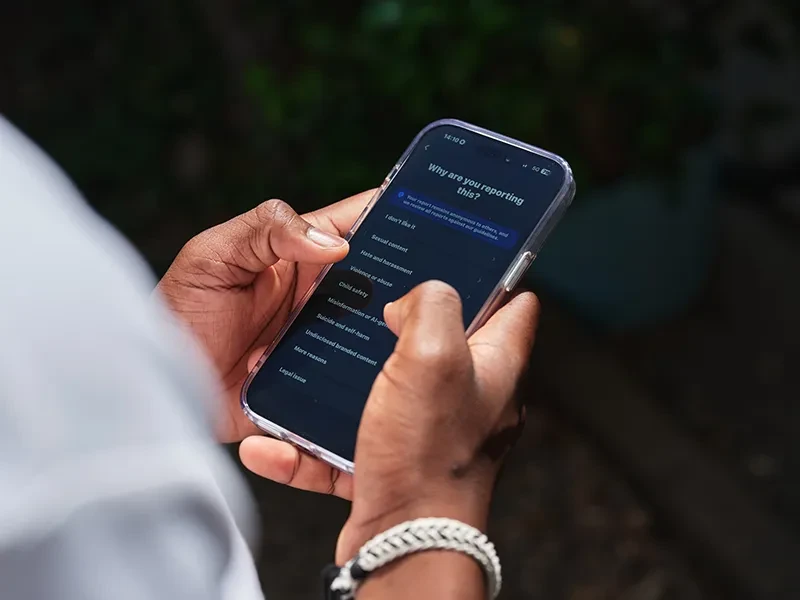
The responsibility is firmly on tech companies and governments to stop platforms from showing children and others harmful content. Young people should not have to shoulder that responsibility. However, understanding the signs of online harm and knowing how to block and report harmful content can help them navigate the internet more safely.
Building good online safety habits is another important step. Keeping social media accounts private, using strong passwords, only accepting requests from trusted people, and thinking carefully before sharing personal information can all help protect privacy and wellbeing online.
Just as importantly, remember that you’re never alone. If you're worried about something you've seen or experienced online, reach out for support. Trusted adults and specialist organisations can all help you navigate challenges and stay safe online. You’ll find a range of online safety resources and support organisations at the bottom of this page.
Parents
All parents should educate themselves on the warning signs of online harm and the best safety habits – and help their children to recognise these too. Creating space for open, judgement-free conversations will also make it more likely that their child will speak up if they encounter any harm.
If parents feel it’s right for their child, they can also make the most of parental controls, privacy settings, and age-appropriate restrictions on devices, apps, games, and social media platforms. These tools can help limit exposure to harmful content and give children a safer online experience overall.
The UK social media ban explained
In June 2026, the UK Government proposed a ban on social media for children under 16 years old. It was announced as ministers said tech companies had ‘countless opportunities to keep children safe, yet failed to act’.
What does the UK social media ban entail?
The Government has not yet published final plans but it is likely that the ban for under-16s would include major social media platforms, such as Snapchat, TikTok, YouTube, Instagram, Facebook and X. Messaging services like WhatsApp and Signal are unlikely to be included. The UK Government has claimed they will ‘go further than any other country’ by also bringing in blocks on live streaming and talking to strangers for a range of websites – including gaming sites.
While 16 and 17 year olds will be allowed on social media sites, there will be a default curfew – from 12am to 6am – and addictive features like autoplay will be switched off. However, this is still optional as they can change their settings to override it. On top of this, people also won’t be able to access ‘romantic companion’ AI chatbots until they’re 18.
When will the ban come into effect?
The social media ban is expected to come into force in Spring 2027. The first set of regulations will be introduced in Parliament by the end of 2026.
How will the social media ban be enforced?
Platforms will need to check users are over 16, although the ‘how’ isn’t certain yet. Ofcom has been asked to move quickly on finding "highly effective” methods that work. They are due to present different options in the later months of 2026.
The question on everyone’s lips is: can this really be enforced effectively? The Australian Government was the first in the world to ban social media for under 16s – but many believe it has failed. Recent research revealed that 61% of Australian 12-15 year olds still have access.
Why a blanket ban ignores children's rights
Experts have argued that the social media ban undermines children’s right to information, freedom of expression and participation – and risks driving them to riskier areas of the internet. The UK Government’s proposal for a blanket ban on social media for under-16s risks treating the symptom rather than the cause. While there is understandable concern among parents and policymakers about children’s safety, restricting access does not address the algorithms, platform design and business models that drive harmful content.
Most importantly, banning children does not ban misogyny. The harmful content will remain on platforms, ready to reach young people when they are allowed to return – unless the systems that amplify it are changed.
Plan International UK does not support the blanket social media ban as it places the burden on young people rather than the platforms creating and profiting from unsafe environments. Girls have repeatedly told us that social media helps them learn, connect, create and feel less alone. The question isn't whether young people belong online. It's why we're asking them to give up a space they love, making their worlds smaller, instead of telling tech companies to do better.
How Plan International UK supports the rights of girls in the UK
Plan International is a global children’s charity advancing equality for girls and a just world for all. We work in 80 countries around the world – standing with girls to make sure they can go to school, are protected from violence, can access healthcare, and are supported when disaster and conflict strike.
Girls have a right to feel safe online. That’s why we are also using research and policy and advocacy engagement to tackle online harms. Recently, we launched a powerful piece of research — From memes to misogyny: The gendered content harming our children on social media. This project sheds light on how girls and boys are being pushed into dramatically different online worlds by social media algorithms within just 20 minutes of opening accounts. This leaves children facing a dangerous drip feed of misogyny and toxic gender stereotypes.
The report is a call to action to the UK Government to take harmful content seriously. Ministers must use all available methods to shift narratives, regulate platforms, and stop all types of harm, from casual sexism to violent misogyny. You can find out more here.
Within minutes, algorithms push girls and boys into strikingly different online worlds. Built on misogyny. With real-world consequences.
But the conditions children face online aren't inevitable. They're choices made by social media platforms, enabled by governments more focused on punishing children for Big Tech's failures than holding platforms to account.
It's time to change this. Dive deeper into how algorithms are shaping children's online experiences in our report.
FAQs
Can algorithms be changed to prevent online misogyny?
Sadly, until we stop misogyny offline, it will always exist in some form online. The good news though? Tech companies could make a massive difference still with some redesign.
If they stop algorithms rewarding divisive content with higher visibility, slow down harassment patterns and limit the reach of abusers, we could witness real change.
Where can young people find support for digital harassment?
If you are facing digital harassment in the UK, there is free, confidential support out there:
- Childline: Anyone under 19 can call 0800 1111 or use their online chat. They also provide a tool to help remove shared intimate images online.
- The Mix: Gives free, confidential support for young people under 25 via online, social media and mobile phone. Text THEMIX to 85258.
- CEOP Safety Centre: Run by the National Crime Agency to report online grooming, sexual abuse, or severe communication threats.
- UK Safer Internet Centre: Provides guidance on reporting harmful content and managing online safety issues.
Internet Watch Foundation: IWF enables anonymous reporting of any suspected child sexual abuse images or videos. IWF also has resources for other disturbing content.
Report Harmful Content: Enables reporting of a wide variety of harmful content such as threats, bullying, self-harm and suicide content and more.
Will the social media ban be effective at preventing online harms?
Sadly, we don’t think so. The actions the government is taking do nothing to address the toxic feeds fuelled by sexism and misogyny – which will be there waiting for girls and other teenagers when they turn 16. If the government is truly committed to fixing the problem, they must hold tech companies to account to build safer platforms. Girls deserve an online world where they can participate, express themselves and be protected from harm. We know that's possible. Now it's time for tech companies and policymakers to make it happen.
Last updated 11/09/26