
Tackling online harm
Within minutes, algorithms push girls and boys into strikingly different online worlds. Built on misogyny. With real-world consequences.
It’s time to change the conditions online.
Just 20 minutes. That's how long it takes social media to start serving sexist and gendered content to children’s accounts, according to our new research.
Girls are being bombarded with unrealistic standards. Boys are being fed misogynistic content and told to be richer, stronger, more successful.
The harm lurks between light-hearted videos and memes. Scroll by scroll, it starts to feel normal. Girls and boys are changing the way they act, dress and behave as a result. And misogyny is being embedded in young minds as ‘common sense’.
When online algorithms reward harmful attitudes, everyone in the real world loses – and girls pay the biggest price.
But the conditions children face online aren't inevitable. They're choices made by social media platforms, enabled by governments more focused on punishing children for Big Tech's failures than holding platforms to account.
It's time to change this. Dive deeper into how algorithms are shaping children's online experiences in our report.
From memes to misogyny:
The gendered content harming our children on social media
Download the report
You can also download the executive summary of the report.
of girls regularly see messages online telling them how they should behave
of young men aged 18 to 24 believe they have been negatively affected by gender equality
of 11 to 17 year olds want social media companies to do more to remove harmful content
The experiment
To see how TikTok shapes children's worlds, we created a series of fake accounts modelled on 13 to 16 year olds with interests like football, gaming, dance and music. Then, we did what millions of children do every day: scrolled.
Finding no.1
Harmful gendered content
For five days, our researchers spent up to 20 minutes a day on TikTok, engaging only with content that reflected each persona's interests. They never sought out harmful content. They never interacted with it.
What happened next was entirely driven by the algorithm: a flood of harmful content. Think appearance-based content like expensive skincare routines to looksmaxxing to appearance-rating tools. Think content that enforced rigid gender roles like the 'stay-at-home girlfriend' and 'male provider'. And think content that mocked feminism and undermined girls' bodily autonomy.
The message was clear. Girls were told: Be beautiful. Be compliant. Know your place. Boys were told: Bottle up your emotions. Chase status. See gender equality as a threat.

Finding no.2
Escalating harmful and illegal content
But it didn’t stop there. Within two hours, algorithms also began to serve children self-harm and suicide themed content.
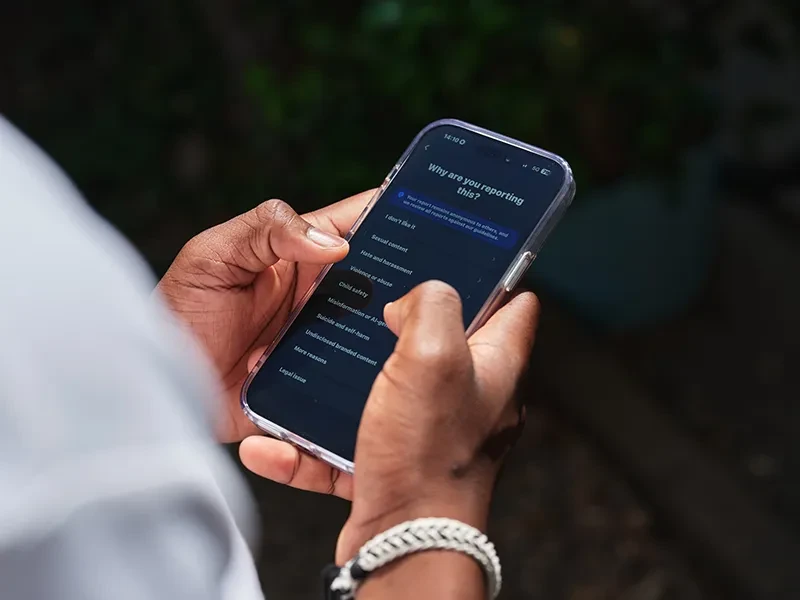
Researchers reported this content to TikTok, but in every case, it was judged not to breach the platform’s community guidelines – despite such content being classified as an offence under the UK's Online Safety Act.
Girls were more likely to recognise and reject harmful content. Meanwhile, boys were more likely to get caught in echo chambers where misogynistic content was often disguised as memes or banter.
Finding no.3
Real world consequences
Workshops and surveys we later held with children confirmed our fears: online harm is seeping into the real world. Girls told us about being expected to “lay low” while boys take the lead. Boys described traditional gender roles, with men as providers and women as carers, as simply “normal”.
Social media is a central part of childhood, where young people connect, learn and express themselves. But our research shows these spaces are far from neutral, exposing children to a constant stream of gendered messages that shape how they see themselves, others and their futures.
Our conclusion? Social media platforms are failing both girls and boys.
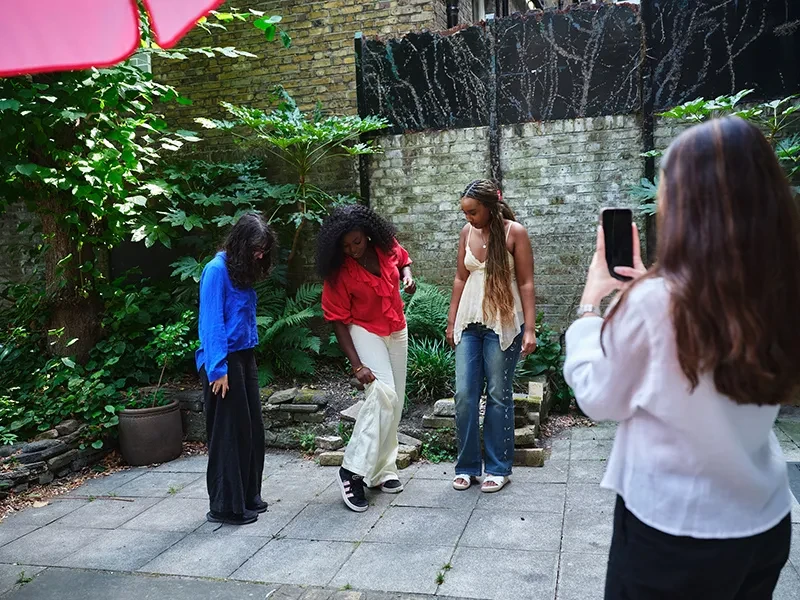
“Social media is an echo chamber of your interests. As a girl, I mostly see stuff targeted to girls. I sometimes see men having the wildest takes about women, and it makes me angry because it is so wrong.”
Neylia, 19, Hampshire
It's time to change the conditions
For generations, girls have faced discrimination. Born into unfair terms they never agreed to – terms that limit their rights, safety and opportunities.
Now, social media algorithms are helping to entrench those inequalities. The harmful messages girls have long faced offline are being amplified online, while boys are increasingly exposed to content that normalises misogyny and rigid ideas about gender.
Left unchecked, they’ll continue to threaten girls’ safety offline, deepen misogyny and shape how girls and boys see their place in the world.
What are we calling on the UK Government to do?
- Strengthen the Online Safety Act so that tech companies are legally required to design products that put young people’s safety front and centre. A social media ban for under-16s isn’t the answer.
- Establish a Youth Council for Online Futures – because decisions about young people’s online lives should not be made without them.
- Demand mandatory annual transparency reports to prove compliance with Ofcom regulations.
- Embed online safety in school curriculums, starting from primary level.
- Fully integrate digital harm into its Freedom from Violence and Abuse cross-governmental Violence Against Women and Girls Strategy.
A global phenomenon
"We need better protection from online abuse which is becoming a growing threat even in fragile contexts like mine."
The words of young activist Mary, from South Sudan, remind us that while our report is rooted in the UK, online harm doesn't stop at borders. As more young people worldwide gain access to phones and the internet, harmful norms and stereotypes are being shared and reinforced on a global scale.
Girls and young people everywhere are navigating digital spaces shaped by the same discriminatory attitudes, gendered stereotypes, and harmful content – a reminder that this is part of a much wider, shared global challenge.

How can you spot harmful content online?
Not all harmful content arrives waving a red flag. More often, it turns up disguised as a meme, a viral video or a comment section full of laughing emojis.
Learn more about how to spot sexist, misogynistic or harmful content – and how to talk to young people about it.
“In 2021, when school was disrupted and I was about 10 or 11, I was looking at this content thinking, “I want to be successful, so I need to listen to what this person is saying and follow in his footsteps.” I would abandon relationships or share the same advice with friends (...) I started thinking I needed those traditional values to be successful.”
Daniel, 16, London