The importance of access to contraception for young women and girls

Access to contraception is a fundamental right. It lets young women and girls make informed choices about their bodies and futures. Contraception protects health and prevents unwanted pregnancies. However, millions still face barriers to contraception globally. This limits their freedom and opportunities.
What access to contraception means
Access to contraception means getting the information, products, and services needed to prevent unwanted or unplanned pregnancies. This should be affordable or free and without judgement.
Why access to contraception is important for girls and young women
Access to contraception is vital for girls and young women. It gives them agency over their bodies. When they take charge of their sexual and reproductive health, they can stay in school and finish their education. They can also join the workforce, and decide if and when to have children.
Preventing unwanted pregnancies and unsafe abortions
Preventing unwanted pregnancies and unsafe abortions requires accurate information. It also requires supportive laws and policies that promote access to healthcare.
Girls and young women need to understand how their bodies work and how pregnancy happens. This helps them make informed decisions.
Free or low-cost protection, like birth control, is important to help prevent pregnancy. Also, knowing about options like IUDs (intrauterine devices) or emergency contraception can help if things don’t go as planned.
Access to healthcare providers or clinics is vital for young women. They need spaces to ask questions without fear of judgment. In areas with safe and legal abortion services, young women are less likely to use unsafe methods that can harm their health. Social factors, such as peer pressure, money issues, and stigma, can make it hard to seek help. So, support systems and reliable information are crucial.
Preventing against sexually transmitted infections
Access to contraception, especially barrier methods like condoms, helps lower the spread of sexually transmitted infections (STIs). When people can easily get condoms and understand how to use them, they are more likely to use them during sex.
Condoms form a barrier that keeps bodily fluids—like semen, vaginal fluids, and blood—from passing between partners. This helps prevent the spread of many STIs, such as HIV, herpes, chlamydia, and gonorrhoea. Easy access means people can use protection consistently. They won’t skip it because it’s unavailable or hard to get. Access to contraception, along with safe sex education, helps protect individuals and their partners. This also lowers overall infection rates.
Contraception's impact on education and economic empowerment
When people, especially girls and young women, can choose when to have children, they are more likely to stay in school. They won't drop out because of an unplanned pregnancy.
Staying in school longer helps them build skills. This leads to better jobs and higher incomes over time. It also gives them more control over their lives and future goals.
Global and UK perspectives on contraception access
Access to contraception looks very different around the world. But globally, it is seen as a vital part of healthcare, human rights, and development.
Access to contraception statistics worldwide
Worldwide, organisations like the World Health Organization (WHO) and the United Nations Population Fund (UNFPA) help make contraception affordable and accessible. This is because it:
- helps prevent unintended pregnancies
- helps protect against sexually transmitted infections (STIs)
- gives people the right to choose when, if and how to have children
- supports education and economic development
- improves health outcomes.
However, access is not equal everywhere. In many low-income countries, people still face several barriers. These include costs, lack of nearby clinics, and a limited supply of contraceptives. Stigma and cultural or religious restrictions add to the challenges. The WHO says 164 million women want to avoid or delay pregnancy. But they cannot access effective methods to do so.
In the UK, contraception is widely available through the NHS and is generally free of charge. It is available in GP surgeries, sexual health clinics, and some pharmacies. This makes access much easier compared to many other countries. Emergency contraception is also increasingly accessible. For examples, the NHS has made it easier to get the morning-after pill for free at community pharmacies. This helps reduce regional inequality and ensures quick access.
Despite this, the UK still faces challenges. Access to sexual health services can vary depending on location, often referred to as a ‘postcode lottery’. Underfunding of sexual health services has also made them less available in some areas of the country. These issues can make it tough for young women to get timely contraception in some areas.
The consequences of limited or no access to contraception
Limited or no access to contraception has many effects. It impacts individuals, families, healthcare systems, and societies.
Unintended pregnancies and unsafe abortions
One of the most immediate impacts of limited or no access to contraception is a rise in unintended pregnancies. This can disrupt education or career plans, especially for young women. It can increase financial strain on families too. It’s also linked with higher rates of unsafe abortions in areas with limited access to safe procedures. This raises the risk of injury or death or even pprosecution in places where abortion is restricted.
Increased health risks and maternal mortality
Health outcomes are closely tied to contraception access. Without it, people can’t plan or space pregnancies. This increases the risk of complications for both the parent and child. Maternal and infant mortality rates are often higher in areas with limited contraception. There’s also a greater spread of sexually transmitted infections, including HIV/AIDS, when barrier methods like condoms aren’t accessible.
Social and gender impacts
Access to contraception is closely tied to autonomy and gender equality. When it’s restricted, women and girls in particular may have less control over their lives. This can lead to early marriage, lower education levels, and fewer job opportunities.
What are the barriers to contraception access for girls?
Girls often face a mix of structural, social, and personal barriers when trying to access contraception.
Challenges related to age, gender, and social norms
Social stigma and cultural norms are among the biggest obstacles in accessing contraception. In the UK, girls under 16 can access contraception from a doctor, nurse or pharmacist. In some communities, unmarried girls feel discouraged or even shamed for seeking it. There can be a fear of being judged by family, friends, or healthcare providers. This fear can make them stay away from clinics altogether. Judgement from healthcare providers may stop them from coming back.
Lack of information and misinformation
Lack of accurate information is also a big barrier to accessing contraception. In places with little or no sex education, girls might not understand how contraception works. They may also struggle to find it or use it properly. Misinformation can also be a problem. For example, some people fear that contraceptives cause infertility. Others believe the birth control pill leads to weight gain. Another belief is that "natural" methods, like tracking cycles with an app, are safer. This confusion can stop them from using contraceptives.
Financial costs and logistical barriers
The cost of contraception for those who live in countries where it’s not free, plays a role in accessing it. Even low costs can be too high for girls who don't have their own income. This is especially true if they also need to pay for transport or consultations. Logistically, clinics may be far away, expensive, or not youth friendly. Girls might face long wait times or lack of privacy.
Confidentiality concerns
Some girls and young women might skip getting contraception because they're worried about privacy. They fear that their parents, carers or even their partner will be informed, or their information will be shared. In the UK, getting contraception is a confidential service. This is unless the healthcare provider thinks that you or someone else is at risk of harm.
Overcoming the barriers to contraception access
To break down barriers to contraception access, we need coordinated changes. These need to be across education, healthcare, policy, and societal norms.
Improving education
Providing age-appropriate sex education in schools and communities is key. It helps girls understand their options and how to use contraception safely. Sex education shouldn't just be about pregnancy. It should also cover topics like consent, relationships, and STI prevention. This educates boys too and reduces misinformation and fear. It also reinforces girls’ bodily autonomy.
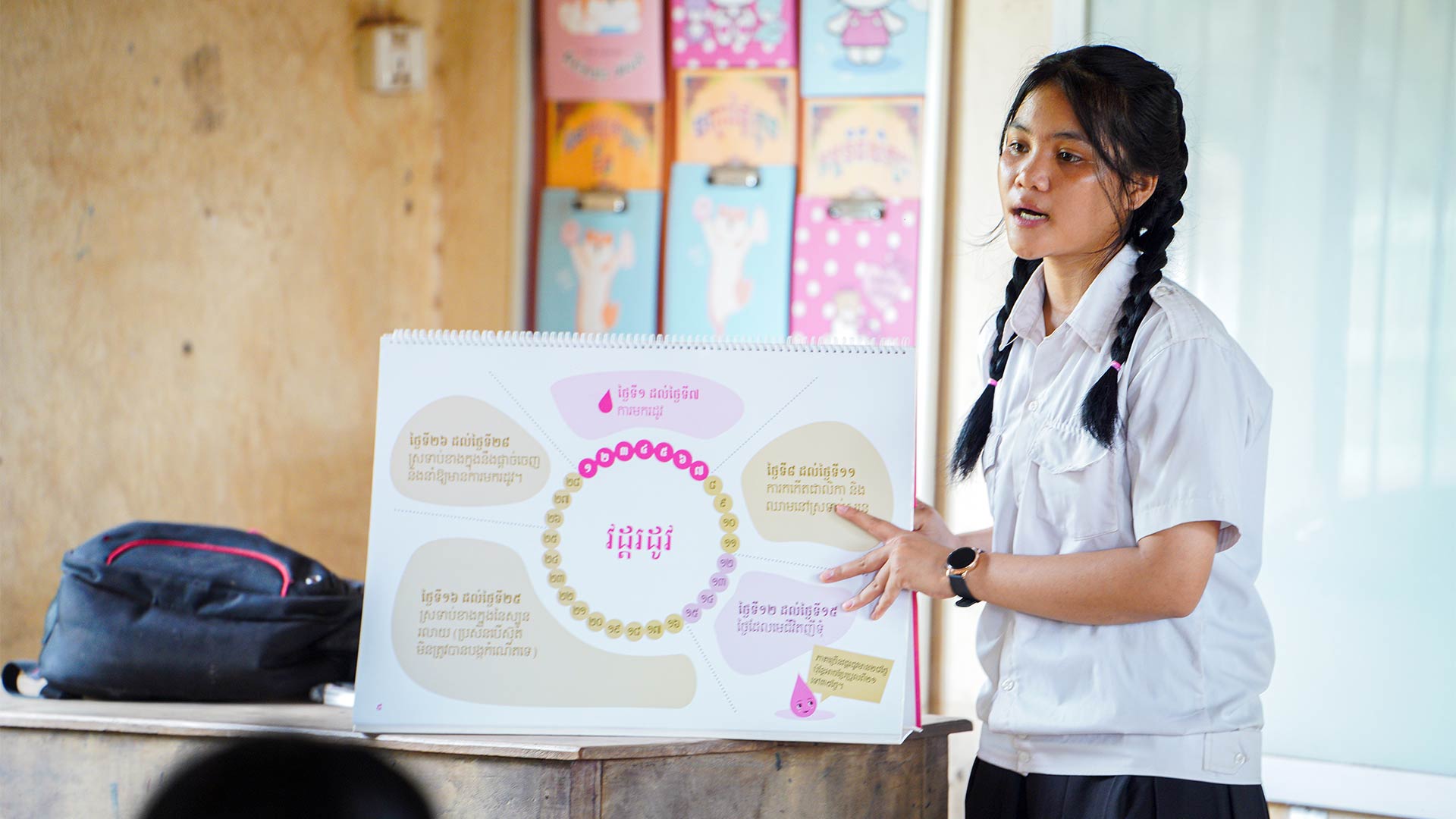
“I think most girls feel shy at first when it comes to talking about these topics,” says Sopheak.
When Sopheak first joined her local youth club, she felt embarrassed discussing topics like menstruation and contraception. But with training from partner organisations and encouragement from teachers, her confidence grew. Today, she teaches her peers how to use sanitary pads, understand contraception, and protect themselves from unintended pregnancies.
“Teaching about menstrual health, sex and child marriage has made a big difference,” Sopheak explains. “It has helped to reduce both child marriage and school dropout rates.
Tackling misinformation and restrictive policies
Misinformation hurts access to contraception. Strict policies make it worse. People often don’t trust or understand their options. This may prevent them from getting the care they need.
When girls hear myths like contraception causes infertility, they are less likely to use it. Clear, evidence-based information from schools, media, and healthcare providers replaces fear with confidence. Accurate facts give girls real choices and control over their bodies. Instead of avoiding contraception, this leads to more consistent and proper use. It also offers better protection against unintended pregnancies and sexually transmitted infections (STIs) like HIV/AIDS.
When governments and policies support contraceptive access, they send a clear message. They show that it is normal and acceptable. This helps reduce stigma over time when paired with accurate information.
How Plan UK supports girls’ sexual health and rights
At Plan International UK, we believe that every girl should have control over her body, her life and her future. That’s why sexual health and rights are crucial.
We work with young people to design projects around sexuality education and access to advice and services. We challenge harmful beliefs, practices and norms that limit girls’ choices. This is through working with communities, girls and young people to prevent female genital mutilation (FGM), child marriage and other harms. We also work with girls to influence policy makers in their community to prioritise sexual and reproductive health and rights.
Support our work to empower more girls to make their own choices by donating to Fierce Voices.
FAQs
What is the difference between family planning and contraception?
Contraception refers to the methods used to prevent pregnancy. This includes condoms, pills, and IUDs. Family planning is about deciding if and when to have children, how many to have, and how to space them out. Contraception is one of the main tools people use for family planning. But family planning can also include things like fertility awareness and pregnancy care. It can also include choosing to have children without using contraception.
How can better access to contraception help achieve the sustainable development goals
Better access to contraception plays a central role in achieving many of the United Nations Sustainable Development Goals (SDGs). This is because it affects health, education, equality, and economic growth all at once.
- It improves health outcomes (SDG 3: Good Health and Well-being) by reducing unintended pregnancies and unsafe abortions. It also lowers risks linked to closely spaced births. This helps decrease maternal and infant deaths. Additionally, it supports the prevention of sexually transmitted infections (STIs) like HIV/AIDS.
- It supports education (SDG 4: Quality Education). When girls can avoid unintended pregnancies, they are much more likely to stay in school. Completing their education has lifelong benefits.
- Contraception is closely tied to gender equality (SDG 5). It gives women and girls more control over their bodies and life choices. For example, whether and when to have children. This makes it easier to pursue careers, participate in society, and avoid early or forced marriage.
- It also contributes to poverty reduction (SDG 1) and economic growth (SDG 8). Families can better plan their finances when they can choose the number and spacing of their children. And more women are able to join the workforce, boosting household and national economies
Page published: 27 July 2026
Support girls' sexual health and rights
A donation today could help empower more girls to make choices about their own bodies.