
Escalating tensions across the Middle East are putting children in grave danger. Help us reach them with life-saving support.
Children in Gaza know conflict. They’ve seen it destroy their homes and schools – even kill loved ones. Now, rising hostilities across the Middle East make meeting their needs even harder while putting even more children in harm’s way.
Plan International is responding in the region, working with trusted partners to deliver life-saving support and ensure girls’ unique needs are not forgotten.
Needs remain high and the situation is uncertain. But your support can help us reach more children and ensure girls’ safety, dignity and rights are not overlooked. Please donate today.
Help children in the Middle East now
Help us reach children with life-saving aid.
Gaza: what's happening?
Since the ceasefire agreement on 10 October 2025, families in Gaza continue to face severe humanitarian conditions, with children among the most affected.
Over 80% of homes are damaged or destroyed, displacing 1.2 million people. Many families live in makeshift or temporary shelters with extremely difficult living conditions. Essential health services are on the brink of collapse. And access to enough nutritious food remains a major challenge – more than 60% of young people are experiencing severe food poverty.

How your donation helps children in Gaza
Plan International is supporting children and families in Gaza through trusted local partners, providing emergency food assistance, child protection services, safe learning and recreational activities that help restore a sense of stability for children wherever possible.
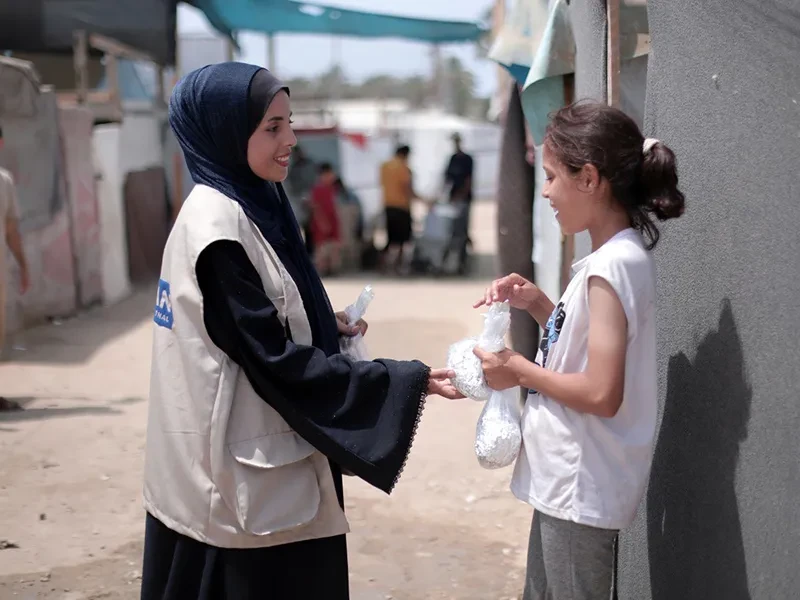
So far in Gaza, Plan International has helped:
- Nearly 450,000 people with food kits, parcels or hot meals.
- Nearly 10,000 children with mental health or child protection services.
- Over 1,700 children access educational activities.
- Nearly 50,000 people with dignity kits, shelter kits or warm clothing.
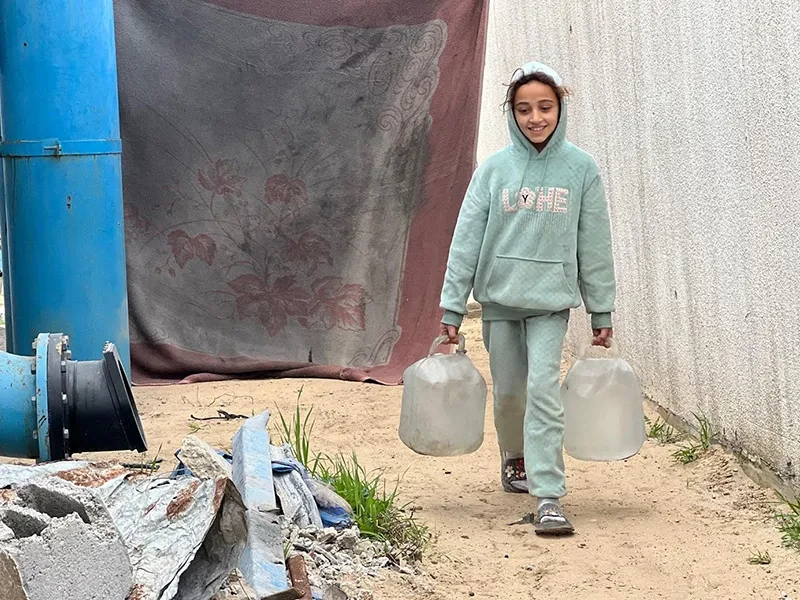
- Nearly 71,000 people with hygiene kits or drinking water.
Escalating tensions across the Middle East are impacting access, costs and logistics, making it harder for humanitarian workers to meet the scale of need in Gaza. But your donations mean that we can mobilise quickly when access allows.
Help children in Gaza now
Help us reach children with life-saving aid in Gaza.
Ensuring girls’ needs aren’t forgotten
In crises like these where families are displaced, girls are especially vulnerable to further harm.
That’s because without the safety of home, the routine of school or the certainty of a full stomach, their risk of violence, exploitation and child marriage increases.
What’s more, access to healthcare and basic hygiene becomes harder. In temporary shelters water, period products and privacy are often in short supply. And if health complications arise, getting medical help is difficult.
We work hard to ensure girls’ safety, dignity and rights are not overlooked during crisis.
‘I’m a refugee in a school’
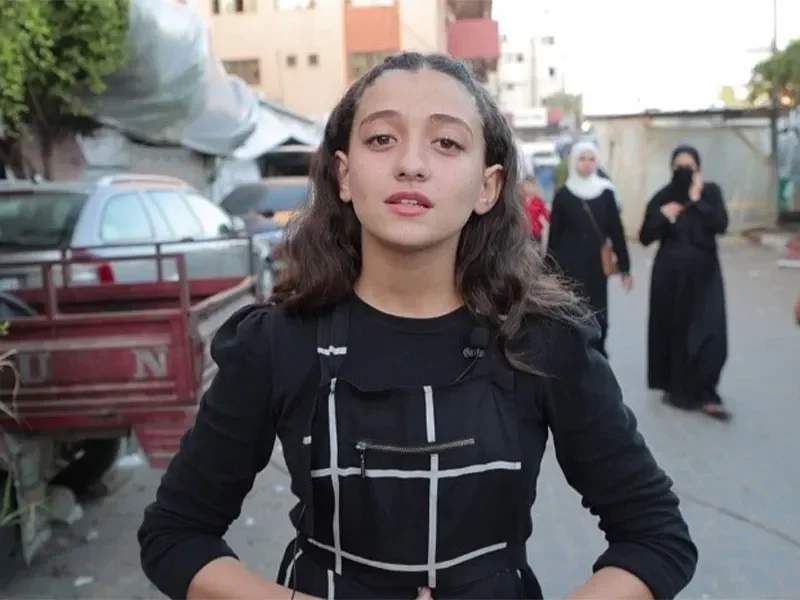
“I spend my days in a school. I am a refugee in a school run by the UN,” says 14-year-old Suhad from Gaza.
Suhad and her family were forced to shelter in a school after fleeing for their lives:
“After the attack, our house was bombed, my father’s workplace was bombed. Our neighbourhood was bombed. We saw that half our teachers were gone. Many people were killed, some of my friends were killed.
“My message to the world is that they look on us with mercy. We are children and our rights are being denied to us.”
While the most acute needs are currently in Gaza, this emergency spans the wider Middle East. Your donation helps our teams in Egypt, Lebanon, and Jordan to deliver coordinated, life-saving support wherever the need is greatest.
Any donations received that exceed what is needed for this emergency will be held in reserve to respond wherever the need is greatest. Thank you for your generosity.
Banner caption: Elin, 11, in Northern Gaza, stands in front of a tent.
Banner photo credit: Ahmed Salama.
*Note to readers: The crisis in Gaza and the Middle East continues to evolve each day. This page reflects the most accurate information available at the time of publishing.