Girls search for safety and hope one month after Nepal floods
What does life look like for girls one month after Nepal's devastating floods? Girls share their stories of loss, resilience and hope.
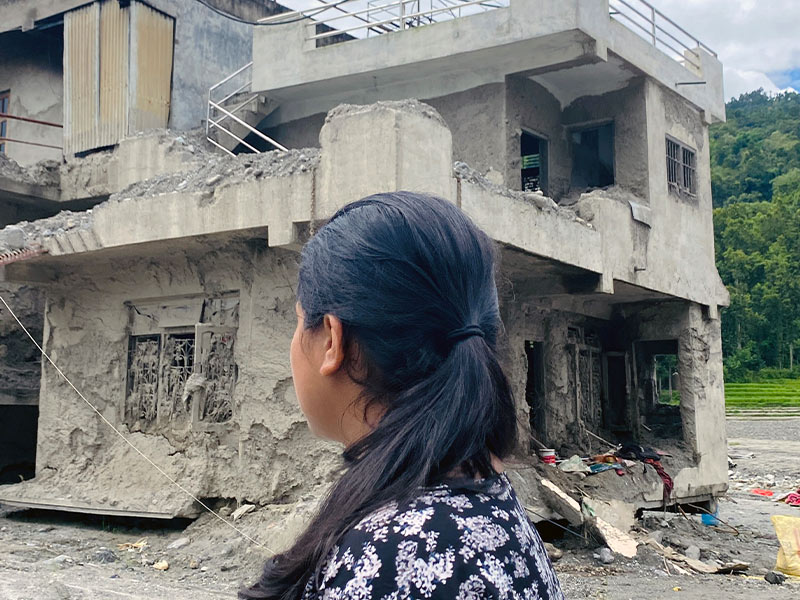

A month on, the Nepal floods may no longer dominate the headlines. But for Nepali girls and their families, the impact of this disaster is far from over.
On 26 August, what began as an ordinary day changed in an instant. Near the Langtang Lirung peak on the Nepal-China border, a huge mass of ice and rock collapsed, triggering flash floods and a devastating avalanche that tore through communities.
More than 1,450 people have been killed and thousands are still missing. Families have lost loved ones, homes and livelihoods. Over 80,000 people have been affected by the disaster that experts say was fuelled, at least in part, by human-induced climate change.
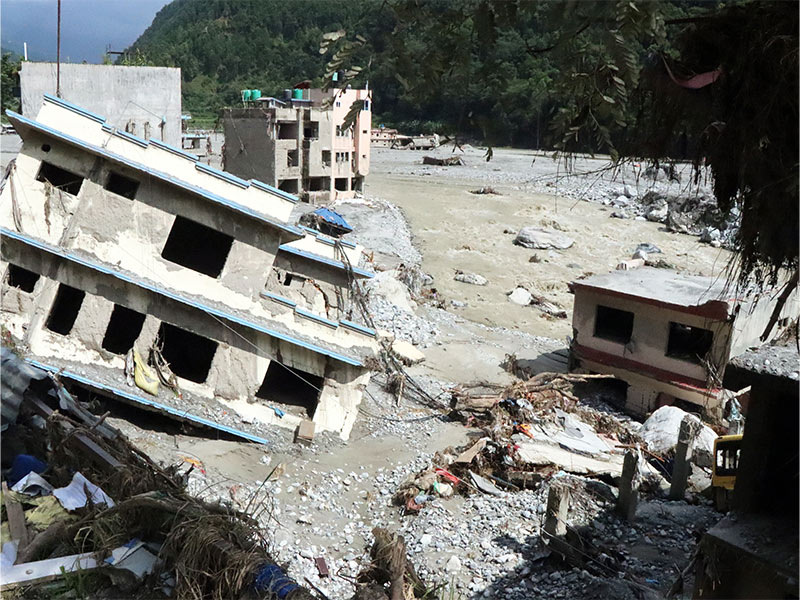
As search efforts continue, survivors are navigating grief, uncertainty and displacement. For girls, the challenges are even greater, with crises like these leaving them with increased risks of violence and difficulty managing their periods safely and with dignity.
Plan International is working in some of the hardest-hit areas of Nepal, providing urgent emergency support to those who need it most.
Below, we hear from girls we’ve met on what life has been like in the weeks since the disaster.
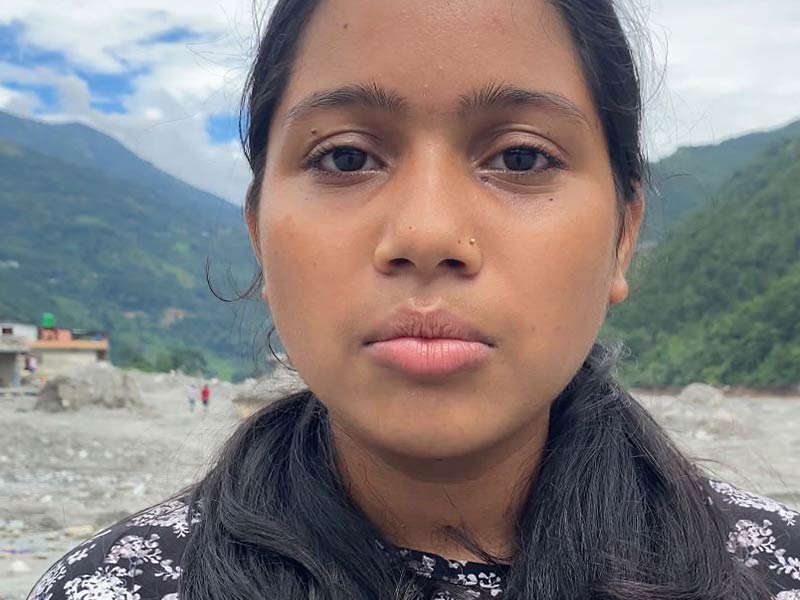
Aditi, 16
As floods tore through Nuwakot, 16-year-old Aditi watched in horror as 12 of her friends were swept away.
“Their bodies have still not been found, she says. “One of them was a very close friend of mine. Whenever I remember that moment, my heart feels heavy and my eyes fill with tears.”
“When we realised the flood was coming, our teacher told us to run up the slope towards higher ground. Some of my friends and I ran as fast as we could and survived. But we also lost one of our teachers. He was on his way to school when the flood swept him away. Losing him has been incredibly painful for all of us.”
After staying in a holding centre for a week after the disaster, Aditi is now back at home and trying to adjust to a new reality. Her school lost five buildings and teachers are discussing how to reopen. But for Aditi, going back won't be easy.
“How will I ever return to the same school?” she asks. “The flood swept away more than just our school buildings. It also took away our beautiful memories, our dreams and our sense of peace. I want my school back. I want to feel safe there again. But I don't know when that day will come.”
Plan International is supporting Aditi as she attempts to rebuild some sense of safety. She comes to visit a child-friendly space in the holding centre every day to play with other children and read.
Aditi says: “The facilitators talk to us, listen to us, and help us to discuss how we are feeling and what we are going through… Having a place where I can come every day, spend time with other children, read and talk to someone makes me feel safer.”
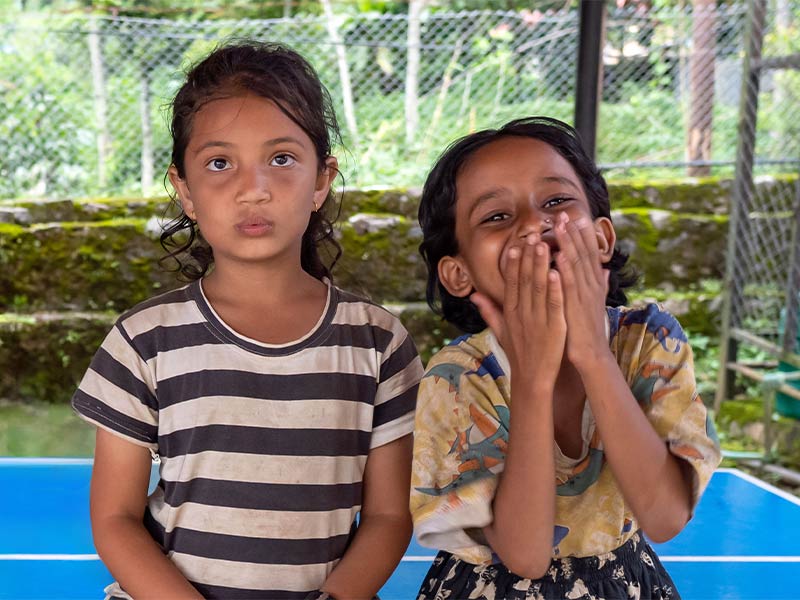
Ahana, 6, and Rachana, 6
Friends Ahana and Rachana, both 6, were waiting for their school bus in Nepal's Rasuwa district when the floodwater suddenly surged. “We heard people shouting, ‘Run, run, the flood is coming’,” recalls Rachana.
She and Ahana both remember confusion and fear quickly spreading as people rushed towards higher ground. "My father was looking for me. My mother was there too. I was scared,” Ahana says.
“I didn’t understand what was going on,” Rachana adds. "People were shouting and pointing in the distance, and I could hear a loud noise. It was only when I saw the electric poles being washed away that I realised how serious it was.”
The day left the girls with painful memories; together, they tell us the names of their friends who went missing that day. A powerful reminder of how swiftly childhood can be overtaken by disaster.
A week after the disaster, their school remained closed as it was used as an emergency shelter. Ahana told us she missed her teachers and friends, and hoped to regain some sense of normality by seeing them again.
At the age of six, Rachana says she already knows what she wants to do with her education when she gets the chance to return. Without hesitation, she says: "I want to be a doctor. I want to treat people affected by the flood and help them get better."
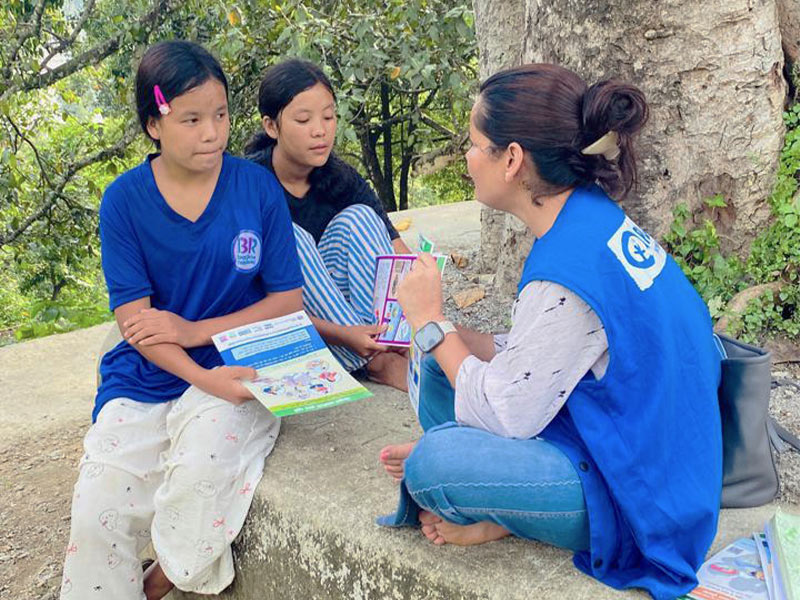
Srijana, 17
Moving from Rasuwa to Nuwakot was supposed to be the start of a new chapter for Srijana, 17.
She and her older sister, Shantimaya, had rented a room so Srijana could continue her education and build the future she dreamed of. But 26 August changed everything.
Thankfully, both sisters were at college when the flood struck. But when they returned, the rented room they had been living in had been destroyed.
“I lost all my clothes, notebooks, pens, and other belongings. My sister lost all her things too. But losing our belongings is not the hardest part,” Srijana says. “Three of my classmates were swept away by the flood. One of our teachers was swept away too.”
With no home and the roads and bridges around them damaged, the sisters’ future now feels uncertain. Their school is expected to reopen but Srijana says she struggles to imagine returning as she’s doesn’t know how she would get there.
For now they are staying in a community centre. At first, Srijana says she found the space unhygienic and overcrowded with limited privacy, as survivors shared limited facilities.
With support from Plan International, the centre has since been reorganised to create separate spaces for girls and boys, safer washing facilities, cleaner living conditions and child-friendly spaces.
Srijana said: “These may seem like small changes, but when you are living away from home after a disaster, they make a big difference. Having a clean place to sleep, a private space to wash and use the toilet, and a safe place to socialise with other children makes us feel much more secure.”
As the girls begin to find some safety and routine again, they are now trying to understand what comes next. Srijana says: “I want to go back to school. I want to continue my studies. I don't want the flood to decide my future.”
By giving to our Children’s Emergency Fund, you can help us get lifesaving assistance to children and families affected by this disaster. If you're able to, please donate.
About Plan International’s response
As girls and their families across Nepal begin the long process of rebuilding their lives, Plan International is working with local partners and authorities to get urgent support to those who need it most.
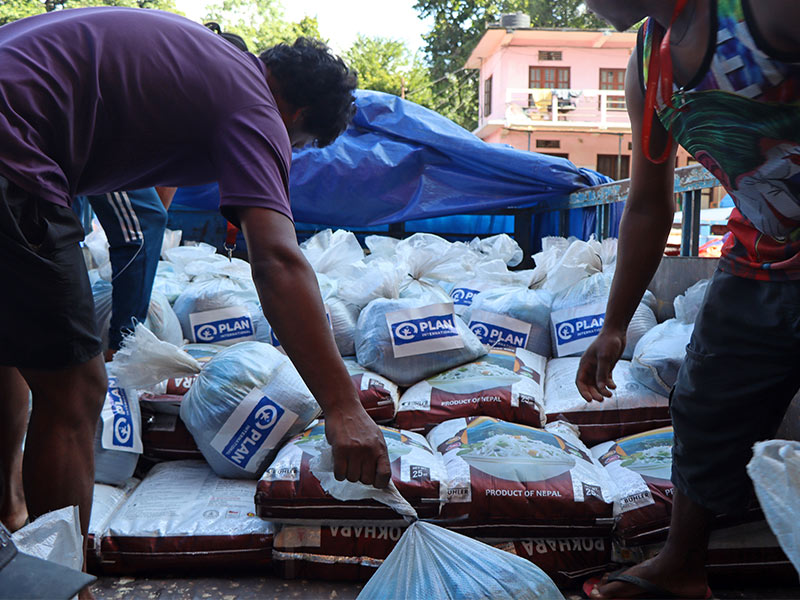
So far, we have reached 11,580 people affected by the floods, including delivering essential supplies like safe drinking water, emergency food packs, shelter kits, and warm blankets.
Disasters like these often hit girls hardest. When homes, schools and community support systems are disrupted, girls face increased risks of violence, exploitation, child marriage and being locked out of education.
As the response moves from immediate relief towards early recovery, we are also supporting affected communities to restore essential services and rebuild safely.
This includes restoring access to safe drinking water, supporting children to return to learning, providing mental health support, and strengthening child protection and safeguarding.