What is modern masculinity?

Modern masculinity reflects how ideas of manhood are changing in today’s world. As traditional gender roles evolve, men face pressure to adapt, often sparking talk of a “crisis of masculinity.” Grasping this change is key to creating healthier and fairer societies.
Defining modern masculinity
Modern masculinity redefines what it means to be a man today. It moves past old stereotypes about how men 'should' act. Men don’t need to be 'tough'; they can express emotions and be vulnerable. Modern masculinity focuses on being a healthy, true version of yourself. It encourages men to be authentic without fear of judgement for not fitting outdated ideas of manhood.
Key traits of modern masculinity
A 2020 qualitative study by the Mantorshift Institute, interviewed over 200 men of various ages and backgrounds across seven countries. It identified five key traits of modern masculinity. These are:
1. Emotional intelligence
Being able to recognise, express, and manage their feelings without shame. Modern masculinity includes strength and vulnerability.
2. Empathy
Understanding the emotions of others and treating people with respect. Modern masculinity does not view having compassion as “unmanly.”
3. Self-awareness
Feeling secure in themselves without needing to control or belittle others, and understanding their emotions.
4. Inclusiveness
Supporting equal partnerships, respecting boundaries, and treating everyone, regardless of gender, with fairness.
5. Authenticity
Living by their values. Making meaningful choices and staying true to their principles.
As well as the above, modern masculinity also includes being responsible and accountable. It values healthy communication and flexibility in identity.
Emotional intelligence and vulnerability
Emotional intelligence in modern masculinity means understanding your feelings and what’s going on inside you. It also means managing your emotions calmly and healthily. Besides understanding yourself, it also means being able to read other people’s emotions and responding to them with empathy, kindness, and understanding.
Vulnerability in modern masculinity means being honest about your struggles, fears, or feelings. Not pretending that everything is fine. It’s having the courage to be open and to ask for help when needed. Some men mask their feelings because, stereotypically, a man must be strong and not vulnerable. But modern masculinity is about letting people see the real you, without feeling like it makes you less of a man.
Equality and respect in relationships
Equality in modern masculinity means viewing your partner as your equal. This means sharing decisions, responsibilities, and power. It’s not about one person leading just because of their gender. It also means that men take on tasks like childcare and household chores, which are traditionally seen as ‘women’s work’. Even if it is women who are doing childcare and household chores, the work should be properly valued.
Respect in relationships means listening to your partner and valuing their boundaries. It also means supporting their goals and treating them with kindness and fairness. It’s about working as a team, not competing for control.
Responsibility, accountability, and allyship
In modern masculinity, being responsible, accountable, and a good ally is key. These traits show maturity, integrity, and social awareness.
In terms of responsibility, men take ownership of their actions, roles, and commitments. This applies at work, in relationships, and in the community. They also see responsibility as being shared. They contribute equally to childcare and running a household.
When it comes to accountability, men admit to their mistakes, learn from them, and make amends when needed. Modern masculinity values honesty and growth. It avoids defensiveness and blaming others.
Being an ally means helping others, especially those who face inequality or discrimination. This extends to racial equality, LGBT+ rights and more. It means speaking up against unfair treatment, promoting inclusivity, and using their position or influence to help others thrive. Allyship also includes supporting platforming others to share their voice and take part in decisions.
The emergence of modern masculinity
Modern masculinity emerged as a response to the changing social, cultural, and economic roles of men over the past century.
Traditional masculinity, known as “hegemonic masculinity,” stressed traits like physical toughness, dominance, and being the main breadwinner. Boys and men were expected to hide their emotions and stick to strict gender norms.
Feminist movements in the 60s and 70s challenged gender roles. They highlighted inequality and urged men to rethink their behaviour and relationships.
Economic changes, like the rise of technology, reduced physical labour. This also changed the idea of the male as the main provider. In the 70s, equal pay campaigns, rising feminism, better education, and new laws helped more married women and mothers enter the workforce. By the 80s dual-income households were the norm. This required men to adapt to more flexible identities.
The increased cultural awareness around mental health, emotional well-being, and diversity emphasised empathy. It encouraged collaboration and self-reflection.
Digital culture and social media have broadened how we view identity. They have given men more room to explore non-traditional roles and lifestyles. On the other hand, it has also exposed men to incels and the manosphere and enabled these ideas to spread.
Influences of feminism and gender equality movements
Feminism and gender-equality movements have strongly shaped modern masculinity. They encourage men to rethink strict gender roles. This helps men adopt healthier, more balanced ways of being.
For example, men are encouraged to express their feelings instead of suppressing them. Expectations around being a bread winner and caregiving responsibilities are more flexible. This allows men to participate more at home and in relationships.
Men are urged to treat women as equal partners and to challenge sexism when they see it. Today, more men can define being a man in ways that feel right to them, not just by old stereotypes.
Men play a key role as allies in breaking down misogyny and as beneficiaries of feminism themselves.
Examples of modern masculinity
Here are a few examples of modern masculinity in everyday life.
Talking openly and honestly about feelings: a man who shares when he’s stressed, sad or upset instead of bottling everything up.
Being an equal partner at home: sharing childcare, housework, and emotional labour rather than seeing these as “women’s jobs.”
Respecting boundaries and equality: actively listening to others, valuing consent, and treating people as equals.
Supporting friends emotionally: checking in and offering support. Having deeper conversations, not just banter or small talk.
Being accountable: admitting mistakes, apologising sincerely, making amends, and resolving to learn and to do better next time.
Standing up against unfairness: calling out sexism, bullying, or discrimination, even when it’s uncomfortable.
Prioritising mental and physical health: going to therapy, seeking help when needed, being active and looking after wellbeing without shame.
Being confident without being domineering: leading with respect, collaboration, and humility instead of control or aggression.
Pursuing interests and hobbies without worrying about stereotypes: cooking or baking at home, taking dance classes, being interested in fashion etc., without fear it’s “not manly.”
How modern masculinity benefits everyone
Modern masculinity benefits everyone. It promotes healthier and more balanced ways for men to live and connect with others. When men can express their emotions, share responsibilities, and treat everyone equally and with respect, relationships grow stronger. Workplaces become more collaborative, and communities become more inclusive.
It reduces harmful stereotypes and boosts mental health. It also encourages men to help out in a positive way without being dominant. Modern masculinity supports a more compassionate, fair, and emotionally aware society.
Global perspectives on modern masculinity
Men worldwide are changing what it means to be masculine. They are embracing vulnerability, emotional intelligence, and empathy. This shift moves away from old ideas of strength, power, and dominance. Here are two examples of global initiatives that are helping to reframe what it means to be a man.
In Senegal, there is a UN-backed initiative called “schools for husbands”. It teaches positive masculinity to respected males in the community. Topics include sharing domestic chores and supporting women’s health decisions, and reducing gender-based violence. The programme has worked well. Some men, who used to enforce patriarchal norms, are now promoting gender equality. This has led to a reduction in the number of forced marriages and more acceptance of methods of family planning.
The Men Enough campaign is redefining our perception of masculinity . Led by the Generation Gender Partnership, the campaign has been implemented in Morocco, Rwanda, South Africa, and Uganda and invites men to “... show up and lean in as positive role models for their families, communities, and society at large.” It encourages boys and men to reflect on their power and privilege. And question the traditional social pressures and expectations of being a man.
What is the crisis of masculinity?
The “crisis of masculinity” broadly means that we are dealing with multiple contradictory concepts of masculinity. Old ideas of what it means to “be a man” are falling apart. Or failing to serve many men in modern society, leading to social, psychological, and cultural issues. It's from the collapse of old models without widely accepted new ones to replace them. But it’s not a single, agreed-upon phenomenon. Many different people use the term in different ways.
Causes of the masculinity crisis
The masculinity crisis is not caused by one thing. Here are some of the most widely discussed causes of the masculinity crisis.
Shifting gender roles: over the past few decades, women have gained educational, economic and political power and traditional divisions of labour have become less relevant.
Economic and labour-market changes: there has been a steady decline in manufacturing and manual labour jobs, usually reserved for men. There has been a rise in knowledge-economy work, which doesn’t reflect the traditional image of masculine labour, and in which women can take part. Economic instability and wages that don’t increase in line with inflation, undermines the role of men as the “provider.” Many many have also taken a greater role in childcare and housework.
Modern alternatives haven’t fully formed: traditional views of what it means to be a man are fading, but clear modern alternatives haven't fully formed. Men often receive messages that appear to conflict such as to be strong but to also be vulnerable. This can create confusion and frustration.
Social isolation: Without supportive communities, men may struggle to develop healthy identities or get emotional support.
Digital culture and communities: online spaces can offer connection and support, but they can also radicalise frustrated or lonely men. Some men turn to extreme ideologies spread by the mansophere that offer simple answers, deepening the sense of crisis rather than resolving it.
How masculinity became a crisis of manhood
Masculinity is often seen as being in “crisis.” The old rules for what a man should be no longer fit modern life. Traditional roles, like being the main provider or being tough, have weakened. This change happened as economies shifted and women gained more power. However, many old expectations still remain. This leaves men stuck between outdated standards and new realities.
At the same time, discouraging emotional expression has left many men without healthy ways to cope with stress, anger, or sadness. As old identities fade and no clear new model appears, many men feel unsure about what masculinity means today. This sense of confusion adds to the feeling of a broader crisis.
How masculinity shapes gender roles and expectations
Traditional masculinity shapes gender roles and expectations by setting informal rules for men’s behaviour. This influences how everyone is expected to act, creating a norm. Masculinity is often linked to traits like strength, self-sufficiency, acting “tough”, and aggression. These traits become standards that men feel pressured to meet. They help define roles like provider, protector, or decision-maker.
Since these norms are seen as the default for men, they also shape expectations for women. Women are pushed toward roles seen as opposite, like being nurturing or emotionally expressive. Masculinity guides how men think men and women should act. It structures the entire system of gender roles, affecting work, family life, relationships, and social status.
Resolving the crisis of modern masculinity
The "crisis of masculinity" can improve by moving away from old norms. We need to update what masculinity means for modern life. This means expanding the definition to include traits like empathy, vulnerability, and compassion, along with strength and resilience. Men should feel encouraged to discuss their feelings and mental health. This can help them build healthier relationships. Boys should learn early that it’s okay to make mistakes, ask for help, be vulnerable, and express their feelings.
The crisis eases when men are allowed more ways to be men. In ways that feel authentic, healthy, and adaptable to today’s world.
Promoting positive models of masculinity
We can promote positive models of masculinity by showing healthy and flexible versions of manhood. These should be based on respect for oneself and others. We can highlight men who display both strength and empathy. It’s important to normalise emotional expression and reinforce care and responsibility at home as strengths. We must also challenge harmful stereotypes and teach healthy masculinity from an early age.
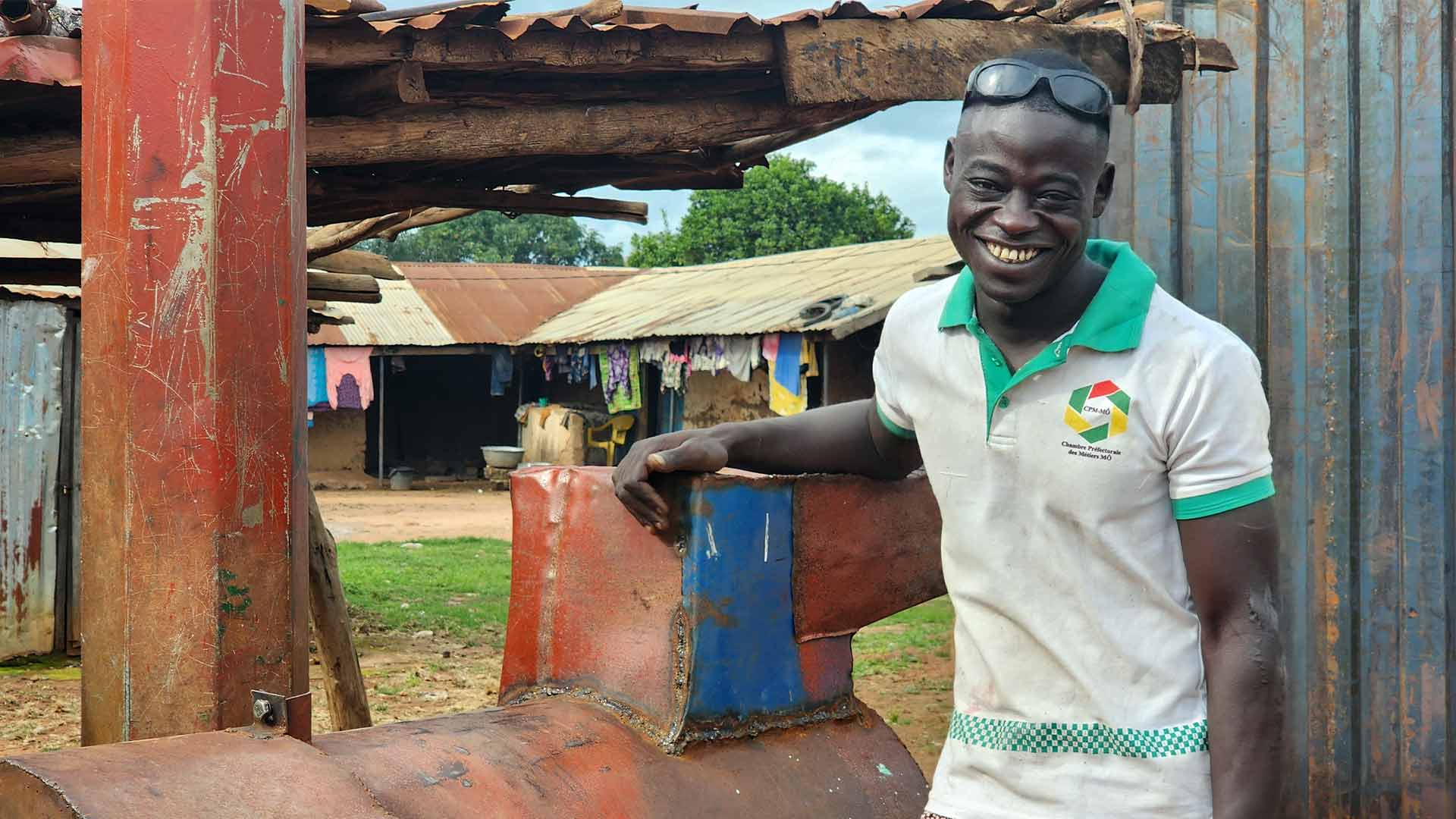
Growing up, 24-year-old Kakarika often witnessed girls in his community being mocked, excluded, or harassed.
“Nobody would intervene,” he recalls. “This behaviour seemed normal because adults and other boys rarely questioned it.” For years, these harmful norms went unchallenged, reinforcing cycles of discrimination and violence against girls.
However, everything changed when Kakarika attended an awareness-raising session organised at the training centre where he was learning to weld. The session introduced him to concepts such as gender equality and positive masculinity - ideas that would transform his outlook on life.
"At first, I thought the fight against gender-based violence mainly concerned girls," Kakarika admits. "But during the discussion, we learnt what positive masculinity is. I realised that, as a boy, I also have a part to play in protecting girls and speaking out against injustices.”
How does Plan International support modern masculinity?
At Plan International, we believe that achieving gender equality requires working with everyone. Together, we need to challenge harmful norms and promote healthier, more equitable ways of being. We focus on changing attitudes and behaviours tied to traditional, patriarchal views of masculinity. These norms hurt women and girls by keeping gender inequality alive. They also limit boys' and men's wellbeing.
We use a gender-transformative approach to help men and boys embrace positive masculinities. This approach celebrates equality, respect, and authenticity. Initiatives such as Champions of Change actively equip young people with the knowledge and skills to question stereotypes, support gender justice, and adopt healthier models of manhood.
Plan International also works with fathers and male caregivers to challenge outdated ideas of caregiving as “women’s work”. We promote nurturing roles that benefit children, families and men themselves. We want to engage men as allies, role models, and advocates. This way, we can break down systems that keep inequality alive. Our goal is to create a future where everyone can thrive.
Page published: 3 August 2026
Champion equality and positive change
Donate today and support programmes transforming harmful gender norms.